Xuan Zhen Men
Introduction: Building Your Foundation
Xuan Zhen Men (玄真门) is the Northern Long Fist system of Wudang Sanfeng Pai. It's where your Wudang journey begins, and everything else you'll learn builds on this foundation. Think of it as learning to walk before you run—without solid Northern style foundation, your Tai Chi won't reach its potential.
The system consists of three progressive levels: Xuan Gong Quan (first level), Xuan Zhen Quan (second level), and Long Hua Quan (third level). You'll start with Xuan Gong Quan (玄功拳), which is where most students begin their training.
What Does "Xuan" Mean?
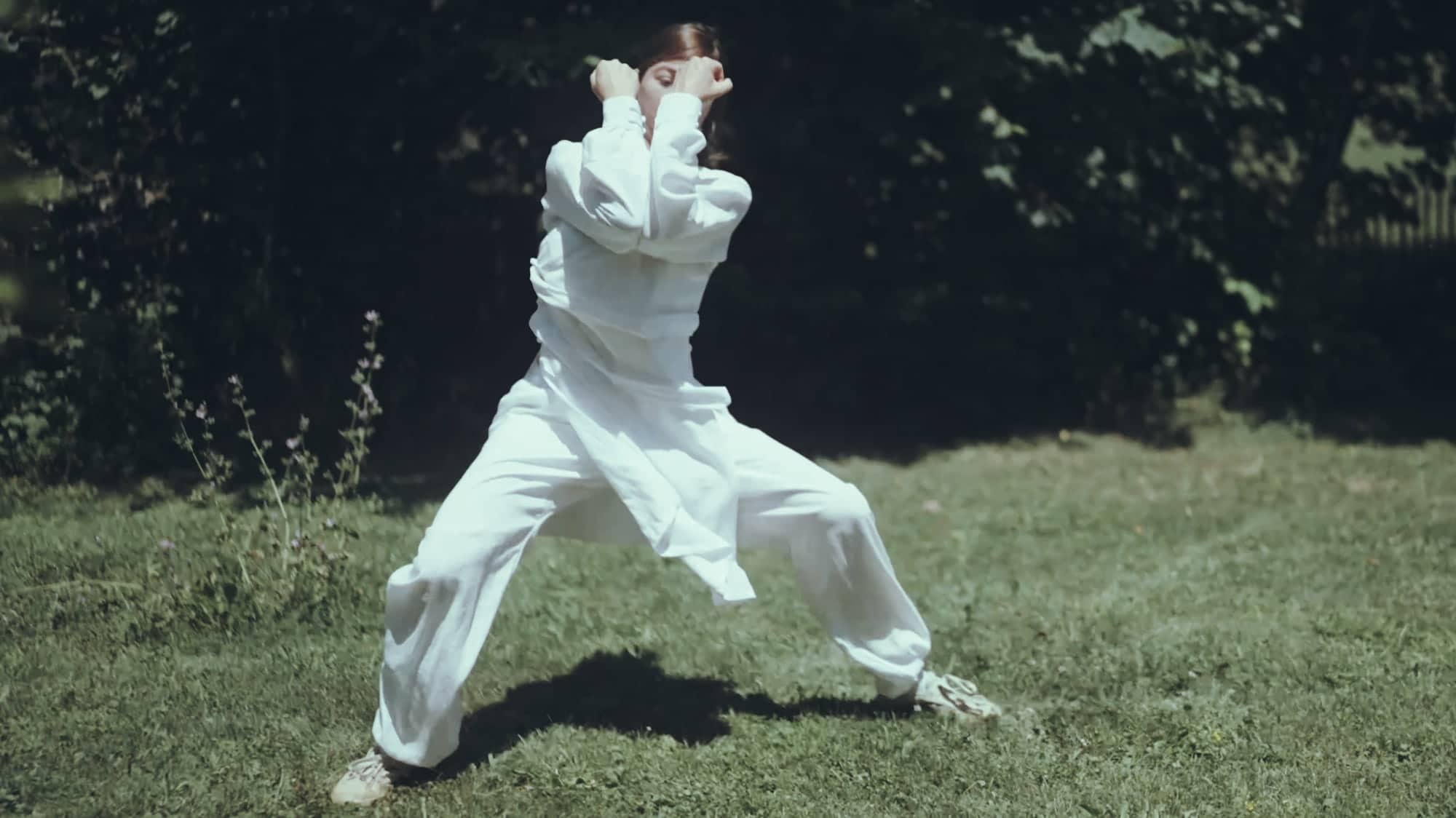
The word "Xuan" (玄) is often translated as "mystery," but in Wudang training it means something much more practical. It's about learning to generate power from natural movements, from nothing to something. Like breathing in to breathe out, or loading a spring before it releases—you're learning to transform empty (Yin) into full (Yang) and back again.
I once wandered the Wudang Mountains and asked an old monk what Xuan means. He said: "In daylight, a house is dark inside—you cannot see, even if there is light in the house. If you are inside a house with light and it's night outside, you cannot see outside. This principle is like our internal arts. Movements that are inside cannot be seen outside. The surface is never as it seems."
This isn't about looking good or performing fancy moves. Xuan Gong Quan teaches you how power actually works in your body. Your master can tell your level of understanding just by watching how you move through these forms.
Where This Comes From
This system was developed by Master Kuang Changxiu (匡常修) at Laoshan Mountain in Shandong Province. He was a Daoist priest who combined traditional Wudang principles with Northern Long Fist techniques. In the 1980s, Master Zhong Yunlong learned this system and brought it to Wudang Mountain's Purple Cloud Palace. From there, it became part of the Wudang Sanfeng Pai curriculum that we teach today.
The Three-Level Training System
Each one takes about a year of dedicated practice, and you can't skip steps—each level prepares your body and mind for the next one.
Level 1: Xuan Gong Quan (玄功拳)
Building the foundation. Three empty-hand forms (Yilu, Erlu, Sanlu) plus Xuan Gong Dao broadsword. Long, open movements. Hard conditioning
Level 2: Long Hua Quan (龙华拳)
Dragon transformation. Empty-hand form plus Long Hua Jian dragon sword. Movements like a dragon winding through clouds. Dragon claw techniques.
Level 3: Xuan Zhen Quan (玄真拳)
Advanced explosive power. Empty-hand form plus Xuan Men Jian advanced sword. Bullet power. The highest level of the Northern styleThese three levels form Xuan Zhen Men (玄真门), the Northern style foundation of the entire Sanfeng Pai system.
Level One: Xuan Gong Quan
What You're Learning
Xuan Gong Quan has three forms you'll learn in sequence:
- Yilu (一路) - First Road
- Erlu (二路) - Second Road
- Sanlu (三路) - Third Road
Each form builds on the previous one. You'll spend roughly one year at this level if you train consistently.
Xuan Gong Dao (玄功刀) You'll also learn the Xuan Gong Broadsword during this time, applying the same principles with a weapon. The saber form has 43 postures and teaches you to extend your body mechanics through the weapon—cutting, sweeping, hooking, tangling. It's not a separate practice; it's the same foundation expressed through a different tool.
What This Level Does
Opens and Conditions Your Body
The movements are long, wide, and open. You're stretching everything—tendons, fascia, muscles. Your body needs to be flexible before it can be powerful. Think of it like preparing clay before you can shape it.Builds Physical Foundation
- Basic stances that root you to the ground
- High kicks and leg conditioning
- Natural footwork patterns
- Tumbling and falling safely
- Basic strikes and combinations
- Linear, direct movements
The Training Focus
You're developing what we call "long power" (长劲)—extended force that travels through your whole body. The training is hard (硬功) on purpose. You're conditioning bones, tendons, and muscles to handle the demands of internal practice later.
This level is about coordination and flexibility first, then strength and hardness. Your body needs to be open and soft before you can make it strong and powerful.
Why It Matters
Without proper Xuan Gong foundation, your Tai Chi will never be more than slow-motion gymnastics. The power transitions you learn here—how to load and release, how to go from empty to full—these are the same mechanics that make Tai Chi effective.
Don't rush through this level trying to look impressive. Master the basics. Your teacher can see immediately if you understand power generation or if you're just copying movements.
Level Two: Long Hua Quan
The Final Transformation
Important Note:
Don't confuse Long Hua Quan with Xuan Hua Quan (玄化拳). They're different forms. Long Hua Quan is specifically the third level of our Northern progression.Prerequisites
Before you even start learning this form, you'll spend about two years conditioning your Dragon Claw hand technique. Without strong dragon claws, this form is useless—it's like trying to play guitar without developing calluses first.
What Changes
This is where the athletic, external style transforms into true internal martial arts. Your movements become like a dragon winding through clouds—fluid, continuous, powerful but not forced.
Dragon Claw Techniques
- Swinging power (悠劲) instead of punching power
- Raking, grasping strikes
- Precise vital point targeting (点穴位)
- Energy flow, not just muscle
Internal Development
This is where you start developing what Master Kuang called "Qi power" (气劲). Not mystical energy, but the ability to coordinate your whole body's force through subtle internal connections. Your hard-trained body becomes a vehicle for refined power deliveryLong Hua Jian (龙华剑)
At this level, you also learn the Dragon Transformation Sword. This is the easier sword form to start with after the broadsword. The sword extends the dragon principles you've developed in the empty-hand form. Your dragon movements now flow through the blade—the same spiraling, continuous power, the same dragon-like quality, but expressed through the weapon
Level Three: Xuan Zhen Quan
The Transition
By the time you reach this level, you can already perform all the basics smoothly. Your body is flexible, coordinated, and conditioned. Now the focus shifts to fighting strategy and explosive power.
What You Develop
Bullet Power (刚弹之劲) Your strikes become like arrows released from a bow or bullets from a gun. Fast, penetrating, explosive. This isn't about muscular force—it's about releasing stored energy instantly.
Fighting Applications
- Palm strikes, punches, elbow techniques
- Twisting and grasping methods
- Partner drills and self-defense
- Vital point targeting basics
- Wooden dummy conditioning
Xuan Men Jian (玄门剑)
At this advanced level you learn the prestigious Xuan Men Jian sword form (also called Wudang Taiyi Xuan Men Jian). This 65-movement form is one of the most advanced Wudang sword forms. It requires better control and more precise technique than Long Hua Jian. The straight sword at this level represents the pinnacle of weapon mastery in the Northern style
Hard and Soft Combined
Xuan Zhen Quan looks forceful and powerful, but underneath you're learning to combine hard and soft. External power supported by internal awareness. This is where most people first start to understand what "internal martial arts" actually means.
The Principles Behind the Practice
From Nothing to Something
The Daoist concept of Wuji (void/emptiness) becoming Taiji (Supreme Ultimate) isn't mystical—it's about learning to generate power from relaxation. Like a whip that's completely relaxed until the moment it cracks. That's what you're training.
Yin and Yang in Motion
Every movement has both:
- Yang: Active, expanding, powerful, forward
- Yin: Receptive, condensing, yielding, returning
You're learning to switch between them instantly. That's what makes the movements effective—not the movements themselves, but the transitions.
Five Elements Strategy
- How forces interact and counter each other
- Where to target based on the situation
- How to transform one type of power into another
Natural Movement
Power comes from moving naturally, not forcing techniques. Watch how water flows, how wind moves, how animals fight—they use their whole body efficiently. That's what you're learning to do.
How You Train
Physical Preparation
Flexibility First
- Daily stretching routines
- Opening hips, shoulders, spine
- Making space in your joints
Stance Work
- Horse stance, bow stance, empty stance
- Building leg strength and rooting
- Learning to sink your weight properly
Basic Techniques
- Punches, palms, kicks in isolation
- Combining them into patterns
- Practicing until they're automatic
Conditioning
- Tendons, ligaments, bones gradually strengthen
- Tumbling and falling without injury
- Building the endurance for repetition
Technical Development
Form Practice
Learn the sequence, then refine it endlessly. Each rep should be better than the last. You're not memorizing dance moves—you're training your body to move efficiently under pressure
Partner Work
Forms alone don't teach you timing. You need someone attacking you, resisting you, testing whether your techniques actually work
Weapons Training
The broadsword extends your reach and teaches you how to coordinate your whole body. The principles are the same as empty hand
Internal Development
Breathing Your breath coordinates with movement. Not forced, not held—natural but directed.
Attention (Yi) Where your mind goes, your Qi follows. You're learning to direct your intention precisely.
The Three Treasures
- Jing (Essence): Your physical substance and vitality
- Qi (Energy): Your capacity to do work
- Shen (Spirit): Your mental clarity and awareness
These aren't separate things—they're different aspects of the same reality. Training develops all three together.
How It Works in Fighting
The Wudang Approach
You don't fight strength with strength. When someone attacks, you're already in contact before you apply force. You transform their attack, redirect it, and add your own power when they're off-balance.
As it says in the Dao De Jing: "The soft and pliable defeats the hard and strong."
Practical Strategy
Timing Over Force
If someone stronger than you pushes, pushing back harder won't work. Instead, you yield slightly, redirect their force, and strike when they're extended and vulnerable.
Use Their Momentum
Their own weight and movement become weapons against them. You're not creating power from nothing—you're redirecting what's already there.
Attack the Structure
When someone's balanced and rooted, they're hard to move. When they're transitioning, shifting weight, or overextended—that's when you strike.
What Each Level Teaches
Xuan Gong Quan (Level 1):
- Long-range striking
- Linear attacks and defenses
- Leg techniques and sweeps
- The mechanics of power generation
- Xuan Gong Dao extends these principles through broadsword
Long Hua Quan (Level 2):
- Continuous flowing attacks
- Dragon claw techniques
- Precise vital point targeting
- Qi-directed power
- Long Hua Jian applies dragon principles through sword
Xuan Zhen Quan (Level 3):
- Close-range explosive strikes
- Joint controls and locks
- Advanced vital point applications
- Hard-soft mastery at the highest level
- Xuan Men Jian teaches the most advanced sword technique
How This Fits Into Wudang Training
What About Xuan Wu Quan?
Important Clarification:
Xuan Wu Quan (玄武拳) is often confused with Xuan Gong Quan because both share the character "Xuan" (玄). However, they are completely separate practices with different purposes and positions in the curriculum
Xuan Wu Quan (玄武拳):
- Also called Liang Yi Quan (两仪拳) - Two Symbol Form
- Named after Xuanwu (玄武), the Dark Warrior deity who protects Wudang Mountain
- A 53-movement form combining hard and soft, fast and slow (representing Yin-Yang balance)
- An advanced form typically learned near the END of the traditional training path
- NOT part of the Xuan Gong/Long Hua/Xuan Zhen progression
- NOT part of Xuan Zhen Men
Why Call It Liang Yi Quan? Because there are already three forms with "Xuan" in their names (Xuan Gong, Xuan Zhen, and Xuan Wu), calling this form Liang Yi Quan avoids confusion. When someone says "Xuan Wu Quan," students might mistakenly think it's part of the Northern Long Fist series. Using "Liang Yi Quan" makes it clear this is a separate, advanced practice that represents the Two Symbols (Yin and Yang) in action.
The confusion is understandable:
- Xuan Gong (玄功) = Mystical Skill - FIRST level Northern style
- Xuan Zhen (玄真) = Mystical Truth - THIRD level Northern style
- Xuan Wu (玄武) = Dark Warrior - SEPARATE advanced form
So remember: Xuan Wu Quan/Liang Yi Quan is its own thing, learned much later, after you've built your foundation.
The Eight Men of Sanfeng Pai
The three Northern Long Fist levels (Xuan Gong, Long Hua, Xuan Zhen) form Xuan Zhen Men (玄真门)—one of eight major categories in our system:
- Taiji Men (太极门) - Tai Chi forms and principles
- Xingyi Men (形意门) - Form-Intent Boxing
- Bagua Men (八卦门) - Eight Trigram Palm
- Baji Men (八极门) - Eight Extremes Boxing
- Xuan Zhen Men (玄真门) - Northern style (this system)
- Eight Immortals Men (八仙) - Eight Immortals techniques
- Six Harmonies Men (六合门) - Six Harmonies methods
- Nine Palaces Men (九宫门) - Nine Palaces practices
The Northern style provides the foundation. Everything else builds on these principles.
The Three Vehicles
Grandmaster Zhong Yunlong teaches that Sanfeng Pai has three levels of practice:
- Martial Arts - Fighting and physical development
- Health Cultivation - Qigong and longevity practices
- Inner Alchemy - Spiritual cultivation
Xuan Gong Quan serves all three. It's primarily martial, but it conditions your body for health practice and prepares you for internal cultivation.
What You'll Gain From This Practice
Physical Benefits
Flexibility and Mobility
- Hips, shoulders, and spine open up
- Greater range of motion in all joints
- Moving freely without restriction
Strength and Conditioning
- Legs become powerful from stance work
- Core stability from proper alignment
- Tendons and ligaments strengthen gradually
- Bone density improves
Coordination and Balance
- Your body learns to move as one unit
- Balance improves dramatically
- Agility and footwork develop naturally
Cardiovascular Health
- Extended practice sessions build endurance
- Heart and lungs strengthen
- Overall stamina increases
Internal Benefits
Energy Circulation
- Your Qi flows more smoothly through meridians
- Blockages clear out over time
- Organs function better
Mind-Body Connection
- You become aware of how your body actually works
- Subtle adjustments become possible
- Control improves dramatically
Mental-Spiritual Benefits
Stress Management
The focus required pushes other thoughts out. An hour of practice is an hour without worry.
Mental Discipline
Showing up to train when you don't feel like it builds character. Repeating the same form 100 times builds patience.
Emotional Regulation
The physical intensity brings emotions to the surface. You learn to work through them instead of avoiding them.Clarity
When your body is strong and your Qi flows well, your mind becomes clearer. It's not mystical—it's just how the system works.
Start Here, Go Far
Xuan Zhen Men isn't glamorous. It's repetitive, physically demanding, and takes years to master. But it works.
This is where internal martial arts actually begin—not with mystical concepts, but with solid physical training that gradually transforms into something refined and powerful. The external conditioning creates the foundation for internal development.
Don't skip levels trying to get to "the good stuff." This IS the good stuff. Every advanced practitioner you see spent years building this Northern style foundation you can't see.
The three levels—Xuan Gong, Long Hua, Xuan Zhen—take you from beginner to advanced systematically. Each year of dedicated practice makes you exponentially more capable. But you have to actually do the work.
Your Tai Chi will only be as good as your Northern style foundation. Your understanding of internal power will only be as deep as your foundation allows. So start here. Build it right. There are no shortcuts.
Key Terms
- 玄真门 (Xuán Zhēn Mén) - Xuan Zhen Men, the Northern Long Fist gate/system
- 玄功拳 (Xuán Gōng Quán) - Xuan Gong Quan, Level One
- 玄功刀 (Xuán Gōng Dāo) - Xuan Gong Dao, broadsword (Level One)
- 龙华拳 (Lóng Huá Quán) - Long Hua Quan, Level Two
- 龙华剑 (Lóng Huá Jiàn) - Long Hua Jian, Dragon Transformation Sword (Level Two)
- 玄真拳 (Xuán Zhēn Quán) - Xuan Zhen Quan, Level Three
- 玄门剑 (Xuán Mén Jiàn) - Xuan Men Jian, advanced sword (Level Three)
- 玄武拳 (Xuán Wǔ Quán) - Xuan Wu Quan (NOT part of this progression)
- 两仪拳 (Liǎng Yí Quán) - Liang Yi Quan (preferred name for Xuan Wu Quan to avoid confusion)
- 一路 (Yī Lù) - First Road
- 二路 (Èr Lù) - Second Road
- 三路 (Sān Lù) - Third Road
- 硬功 (Yìng Gōng) - Hard training/conditioning
- 长劲 (Cháng Jìn) - Long power
- 悠劲 (Yōu Jìn) - Swinging power
- 刚弹之劲 (Gāng Tán Zhī Jìn) - Bullet power
- 气劲 (Qì Jìn) - Qi power
- 龙爪手 (Lóng Zhǎo Shǒu) - Dragon claw conditioning
- 点穴位 (Diǎn Xué Wèi) - Vital point striking
Before starting, it’s helpful to know: