Xuan Gong Quan
Building Power from Nothing
Xuan Gong Quan (玄功拳) is the first level of Wudang's Northern Long Fist system. It's where you start building the foundation that everything else depends on. Not the flashy stuff. Not the mystical-looking movements. The actual mechanics of how power works in your body.
The character Xuan (玄) gets translated as "mysterious" or "profound," which makes it sound like some secret knowledge only monks understand. But in martial arts training, it means something much more practical—learning to generate power from relaxation, from empty to full, from nothing to something. Like loading a spring before it releases. Like breathing in before you breathe out. That transformation from Yin to Yang and back again—that's what Xuan means.
Gong (功) means skill acquired through dedicated practice. So Xuan Gong isn't mystical power—it's internal power derived from disciplined training and understanding of natural forces. This aligns with Daoist principles of yielding, adaptability, and seamless energy flow, distinguishing it from purely muscular strength.
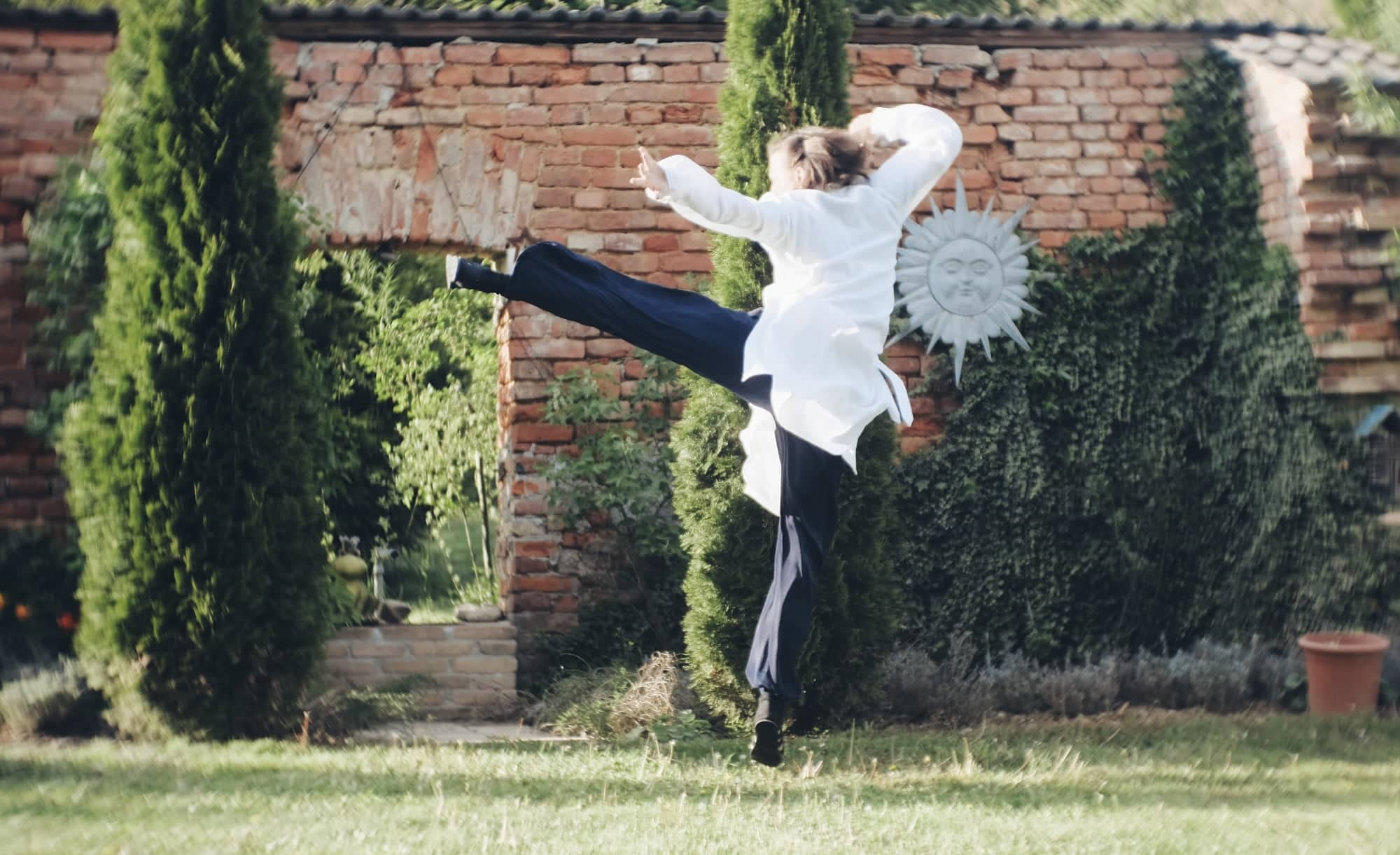
You're not memorizing choreography here. You're conditioning your body to move in ways that actually generate force efficiently. Your teacher can watch you move through these forms and immediately see whether you understand power or you're just copying shapes.
Three Routines, One Foundation
Yilu (一路)
First Road: Twenty movements that teach you the basic mechanics. This is where most students spend their first few months.
Erlu (二路)
Second Road: Twenty-five movements that build on the first set, adding complexity and more sophisticated power transitionsSanlu (三路)
Third Road: Twelve movements that consolidate everything you've learned into refined, efficient techniques.You learn them in order. You don't skip ahead. Each one prepares your body and nervous system for the next. If you try to jump to the third routine without building the foundation in the first two, you'll just be performing empty movements without understanding what makes them work.
Yilu - First Road: The Twenty Movements
The first routine consists of twenty movements that integrate fluidity, balance, and controlled power. Each movement has both a practical application and an internal training aspect. Learn them in sequence, drill them until automatic, then start understanding the deeper layers.
1. 起勢 (Qǐ Shì) – Starting Movement
Application: The opening posture sets intent and structure, preparing the body and mind for action.
Internal Aspect: Focuses on breathing, centering energy, and activating Qi. Not mystical—just learning to stand correctly, breathe naturally, and set your intention before moving.
2. 白鶴亮翅 (Bái Hè Liàng Chì) – White Crane Flashes Wings
Application: A wide, open-handed movement used to block or deflect an attack while maintaining balance.
Internal Aspect: Mimics a crane's grace—rooted stance with light, flowing upper body. One part grounded, one part free to move. This pattern repeats throughout the entire system.
3. 上步雙插掌 (Shàng Bù Shuāng Chā Zhǎng) – Step Forward, Double Piercing Palms
Application: Stepping forward while striking with both palms, possibly to the opponent's chest or face.
Internal Aspect: Uses whole-body connection for explosive yet controlled strikes. You're learning how force travels from your feet through your center and out through your hands.
4. 震步連環劈 (Zhèn Bù Lián Huán Pī) – Stamp Foot and Continuous Hack
Application: A strong stamp to disrupt balance, followed by a sequential hacking strike.
Internal Aspect: Engages the whole body, directing energy in a chain-like sequence. The stamp isn't just for show—it generates power that flows into the strike.
5. 撤步格擋拳 (Chè Bù Gé Dǎng Quán) – Step Back, Parry, and Punch
Application: A defensive movement that creates distance while preparing for a counterattack.
Internal Aspect: Harmonizes retreating energy with explosive counter-force. You're not just backing up—you're loading power while moving defensively.
6. 格拿沖肋拳 (Gé Ná Chōng Lè Quán) – Parry and Thrusting-Ribs Punch
Application: A defensive parry leading into a precise strike towards the ribs.
Internal Aspect: Combines control and offense, focusing on targeting an opponent's weak points. Defense and attack aren't separate actions—they're one continuous motion.
7. 上步通肋拳 (Shàng Bù Tōng Lè Quán) – Step Forward, Penetrating-Ribs Punch
Application: A strong step forward into a direct, rib-targeting punch.
Internal Aspect: Grounded power channeled through a direct attack. Your stance stability determines how much force you can deliver.
8. 騎馬沖肘 (Qí Mǎ Chōng Zhǒu) – Horse Riding Stance, Thrusting Elbow
Application: A stable stance allowing the practitioner to deliver a powerful elbow strike.
Internal Aspect: Fa Jin—explosive power focused in a close-range attack. Horse stance isn't punishment, it's the foundation for generating force.
9. 偷步穿喉 (Tōu Bù Chuān Hóu) – Ghost Step, Piercing Throat
Application: A deceptive step followed by an upward strike aimed at the throat.
Internal Aspect: Stealth and speed, ensuring surprise in attack. The footwork matters more than the strike—if they don't see you coming, the technique doesn't need to be powerful.
10. 進步右弓步沖肋拳 (Jìn Bù Yòu Gōng Bù Chōng Lè Quán) – Step Forward, Right Bow Stance, Thrusting-Ribs Punch
Application: A forward-driving strike with a strong stance for stability.
Internal Aspect: Aligns breath and motion for forceful penetration. Your breathing patterns should match your movement patterns.
11. 撤步連環扎沖拳 (Chè Bù Lián Huán Zhā Chōng Quán) – Step Back, Continuous Piercing and Thrusting Fists
Application: A retreat followed by rapid successive punches.
Internal Aspect: Maintains offensive pressure while moving defensively. Even when you're backing up, you're still attacking.
12. 破膝通肋腿 (Pò Xī Tōng Lè Tuǐ) – Breaking-Knee, Penetrating-Ribs Leg
Application: A leg attack designed to destabilize the opponent while striking their midsection.
Internal Aspect: Uses the entire body's weight for forceful execution. Kicks aren't just leg movements—they're full-body techniques.
13. 震步右弓步沖拳 (Zhèn Bù Yòu Gōng Bù Chōng Quán) – Stamp Foot, Right Bow Stance, Thrust Fist
Application: A forceful step with a committed punch.
Internal Aspect: Generates power through grounded motion. The stamp and the punch aren't separate—they're one connected action.
14. 上步側通腿 (Shàng Bù Cè Tōng Tuǐ) – Step Forward, Lateral Penetrating Leg
Application: A side kick used for defense or attack.
Internal Aspect: Balances stability with flexibility. Side kicks require different mechanics than front kicks—your body needs to understand both.
15. 窩心腳 (Wō Xīn Jiǎo) – Heart Shock Kick
Application: A central kick targeting the opponent's core.
Internal Aspect: Drives energy directly into the opponent's center. This isn't about hitting hard—it's about disrupting their structure.
16. 上步封手貫耳拳 (Shàng Bù Fēng Shǒu Guàn Ěr Quán) – Step Forward, Blocking Hand, Penetrating-Ear Fist
Application: A guarded step with a high strike.
Internal Aspect: Directs Qi upwards while staying rooted. High strikes require stable lower body positioning.
17. 轉身連環拳 (Zhuǎn Shēn Lián Huán Quán) – Face About, Continuous Fists
Application: A turning motion combined with a rapid striking sequence.
Internal Aspect: Emphasizes controlled rotation and offensive flow. Turning isn't just changing direction—it's generating rotational power.
18. 掛面腿 (Guà Miàn Tuǐ) – Swiping-Face Leg
Application: A sweeping kick targeting the opponent's head or upper body.
Internal Aspect: Uses smooth, fluid motion for efficiency. High kicks done correctly look effortless because they are—when you understand body mechanics.
19. 玄功腿 (Xuán Gōng Tuǐ) – Xuan-Power Leg
Application: A powerful kick unique to this style, emphasizing control and impact.
Internal Aspect: Strengthens balance and Qi flow through the legs. This kick demonstrates whether you understand the internal power principles the form teaches.
20. 收勢 (Shǒu Shì) – Finishing Move
Application: A final posture that resets energy and focus.
Internal Aspect: Returns Qi to the center, ending the sequence with control and awareness. You're not just stopping—you're consolidating what you've practiced.
Erlu - Second Road: The Twenty-Five Movements
The second routine expands upon the principles of internal power, fluid movement, and strategic application. Twenty-five movements now instead of twenty. More turning, more transitions, more opportunities to lose your balance or structure if you haven't mastered the basics. This set introduces more advanced techniques, integrating higher-level concepts of Daoist martial arts.
1. 起勢 (Qǐ Shì) – Starting Movement
Application: The opening posture sets intent and structure, preparing the body and mind for action.
Internal Aspect: Focuses on breathing, centering energy, and activating Qi.
2. 白鶴亮翅 (Bái Hè Liàng Chì) – White Crane Flashes Wings
Application: A wide, open-handed movement used to block or deflect an attack while maintaining balance.
Internal Aspect: Mimics a crane's grace—rooted stance with light, flowing upper body.
3. 上步雙插掌 (Shàng Bù Shuāng Chā Zhǎng) – Step Forward, Double Piercing Palms
Application: Stepping forward while striking with both palms, possibly to the opponent's chest or face.
Internal Aspect: Uses whole-body connection for explosive yet controlled strikes.
4. 震步掛手右沖拳 (Zhèn Bù Guà Shǒu Yòu Chōng Quán) – Stamp Foot, Hanging Hand, Right Thrusting Fist
Application: A stomping step disrupts an opponent's balance, followed by a hanging guard and a straight punch.
Internal Aspect: Grounding energy before issuing a strong, precise punch. The stamp generates the power, the hanging hand protects, the punch delivers.
5. 青龍轉身扎擋捶 (Qīng Lóng Zhuǎn Shēn Zhā Dǎng Chuí) – Green Dragon Turns About, Blocking and Hammering
Application: A turn to evade an attack, followed by a downward hammer fist.
Internal Aspect: Spiraling energy and rooted control through turning movements. This isn't about looking cool—it's about using rotation to generate power.
6. 玄功腿 (Xuán Gōng Tuǐ) – Xuan-Power Leg
Application: A specialized kick technique unique to this style, used to attack or destabilize an opponent.
Internal Aspect: Emphasizes balance, leg strength, and Qi flow. By now you should understand what Xuan power means in your legs, not just your arms.
7. 騎馬沖肋捶 (Qí Mǎ Chōng Lèi Chuí) – Horse Riding Stance, Thrusting-Ribs Hammer
Application: A solid stance for delivering a powerful hammer strike to the ribs.
Internal Aspect: Focuses on Fa Jin—explosive force—while remaining grounded. Horse stance again, different strike pattern, same principle of generating power from stability.
8. 跟步擒擋肘 (Gēn Bù Qín Dǎng Zhǒu) – Following Step, Capturing and Blocking Elbow
Application: A controlled step forward while using the elbow to block or counter an opponent's attack.
Internal Aspect: Emphasizes redirection and short-range power. You're learning to follow their movement while controlling it.
9. 碾步返陰掌 (Niǎn Bù Fǎn Yīn Zhǎng) – Grinding Step, Turning Inward Palm
Application: A stepping technique that shifts weight while turning an open palm for either a strike or block.
Internal Aspect: Circular energy used to redirect attacks and maintain balance. The grinding step isn't decorative—it changes angles while maintaining structure.
10. 返身破膝側通腿 (Fǎn Shēn Pò Xī Cè Tōng Tuǐ) – Turn Back, Break Knee, Lateral Penetrating Leg
Application: A turning motion with a knee-breaking move, followed by a lateral kick.
Internal Aspect: Utilizes rotational energy for power and evasion. You're attacking low and high in one sequence.
11. 返身破膝後通腿 (Fǎn Shēn Pò Xī Hòu Tōng Tuǐ) – Turn Back, Break Knee, Back Penetrating Leg
Application: Similar to the previous move, but with a backward penetrating kick.
Internal Aspect: Strengthens the ability to counter from multiple directions. Back kicks require different balance than side kicks—you need both.
12. 跨步後撩腳 (Kuà Bù Hòu Liāo Jiǎo) – Step Across, Back Raising Foot
Application: A step across the opponent's centerline followed by a back-raised kick, possibly targeting the chin or midsection.
Internal Aspect: Requires balance, speed, and flexibility. Crossing their centerline puts you in dangerous territory—the kick better be fast.
13. 落地格扎 (Luò Dì Gé Zhā) – Landing in Defending Posture
Application: A defensive stance after executing a technique, ensuring readiness.
Internal Aspect: Settling energy into a stable structure. After explosive movement, you need to land ready for the next action.
14. 躍步通肋 (Yuè Bù Tōng Lèi) – Leaping Step, Penetrating Ribs
Application: A sudden forward step with a strike aimed at the ribs.
Internal Aspect: Explosive movement—Fa Jin—to close the distance quickly. Sometimes you need to cover ground fast.
15. 側步格扎 (Cè Bù Gé Zhā) – Lateral Step, Defending Posture
Application: A sideways movement to evade or reposition while maintaining a defensive guard.
Internal Aspect: Uses footwork to maintain strategic advantage. Good footwork means you're never where they expect you to be.
16. 插步穿陰陽掌 (Chā Bù Chuān Yīn Yáng Zhǎng) – Inserting Step, Through Yin-Yang Palms
Application: A stepping strike using both palms, incorporating Yin-Yang energy principles.
Internal Aspect: Blends softness and hardness in execution. One palm might be soft and redirecting, the other hard and striking.
17. 鷂子翻身 (Yào Zǐ Fān Shēn) – Harrier Flips Body
Application: A rapid turn or flipping movement to reposition or counter an attack.
Internal Aspect: Circular energy and agility in movement. A harrier is a bird of prey that can change direction instantly mid-flight—that's what this teaches.
18. 插步龍女獻花 (Chā Bù Lóng Nǚ Xiàn Huā) – Inserting Step, Dragon Girl Presents Flowers
Application: A feint or deceptive hand movement to draw an opponent in before countering.
Internal Aspect: Emphasizes fluidity and subtle power. It looks like an offering but sets up a strike—deception is part of fighting strategy.
19. 翻身摸雲貫耳捶 (Fān Shēn Mō Yún Guàn Ěr Chuí) – Flip Body, Touching Cloud, Pounding-Ear Hammer
Application: A turn combined with a double strike targeting the ears, often used to disorient an opponent.
Internal Aspect: Spiral motion enhancing striking power. Hitting both ears simultaneously disrupts balance and orientation.
20. 破膝擺蓮腿 (Pò Xī Bǎi Lián Tuǐ) – Break Knee, Swing-Lotus Leg
Application: A knee-breaking motion followed by a sweeping lotus kick.
Internal Aspect: Balances destruction and elegance. The lotus kick looks beautiful but it's a functional sweeping technique.
21. 震步雙風貫耳捶 (Zhèn Bù Shuāng Fēng Guàn Ěr Chuí) – Stamp Step, Double Wind Pounding-Ears Punches
Application: A double hammer-fist attack aimed at the sides of the opponent's head.
Internal Aspect: Uses stamping to generate force. Same ear-targeting principle as movement 19, different technique.
22. 進步雙推蓮花掌 (Jìn Bù Shuāng Tuī Lián Huā Zhǎng) – Step Forward, Double Pushing Lotus Palms
Application: A forward movement pressing outward with both palms, possibly as a push or strike.
Internal Aspect: Rooted stance directing Qi outward. Pushing techniques require as much power as striking techniques.
23. 撤身邊腿 (Chè Shēn Biān Tuǐ) – Withdrawing Body, Side Kick
Application: A retreating motion leading into a side kick.
Internal Aspect: Blending offense and defense. You're backing up but still attacking—never purely defensive.
24. 獨立穿掌 (Dú Lì Chuān Zhǎng) – Standing on One Leg, Penetrating Palm
Application: A single-leg stance while delivering a palm strike.
Internal Aspect: Tests balance and focus. If you can strike powerfully while standing on one leg, your balance is solid.
25. 收勢 (Shōu Shì) – Finishing Move
Application: A controlled closing stance to seal the form.
Internal Aspect: Regulates breath and consolidates energy. You end the same way you began—controlled, centered, aware.
Sanlu - Third Road: The Twelve Movements
The third and final routine represents the culmination of training in Xuan-Power Fist. It integrates all previous techniques while introducing even more complex sequences, focusing on high-level applications, adaptability, and mastery of energy flow. Only twelve movements, but each one contains multiple layers of meaning.
By the time you reach this level, you should be able to perform the basics smoothly. Your body is conditioned. Your stances are stable. Now you're learning to do less and get more result.
1. 撤步陰陽提手 (Chè Bù Yīn Yáng Tí Shǒu) – Step Backward, Lift Hands in Yin-Yang Balance
Application: A defensive retreat while maintaining balance and control. The hands rise in a yin-yang posture—one up, one down—possibly to intercept or redirect an incoming attack.
Internal Aspect: Maintains energy flow and balance while retreating. Yin-Yang isn't symbolic here—one hand leads, one protects, one advances while one withdraws.
2. 上步擒拿手 (Shàng Bù Qín Ná Shǒu) – Step Forward, Catch and Hold
Application: Stepping forward to apply a Qin Na (擒拿) joint lock or controlling technique. This can be used to seize an opponent's wrist or arm to neutralize their attack.
Internal Aspect: Coordination of breath with stepping forward to issue control. You're not just grabbing—you're taking control of their structure.
3. 右破心腳 (Yòu Pò Xīn Jiǎo) – Attack the Heart with Right Heel Kick
Application: A straight heel kick targeting the center of the opponent's body—solar plexus or chest—breaking their structure.
Internal Aspect: Uses whole-body connection, rooted stance, and internal energy projection through the kick. Not a general front kick, but precise targeting of the center.
4. 擒帶手 (Qín Dài Shǒu) – Catch and Hold
Application: A grasping technique to seize an opponent's limb or clothing, potentially leading into a throw or lock.
Internal Aspect: Utilizing softness and adherence to control an opponent without excessive force. You stick to them, follow their movement, then control it.
5. 左破心腳 (Zuǒ Pò Xīn Jiǎo) – Attack the Heart with Left Heel Kick
Application: Same as movement 3, but executed with the left leg for flexibility in attack sequences.
Internal Aspect: Same principle, other side. You need both legs equally capable.
6. 掛面腿 (Guà Miàn Tuǐ) – Hanging Face Kick
Application: A deceptive high kick that arcs toward the opponent's face, potentially bypassing their guard.
Internal Aspect: Requires balance, flexibility, and whole-body coordination. The arc motion goes around obstacles rather than through them.
7. 騎馬沖肘 (Qí Mǎ Chōng Zhǒu) – Horse Riding Stance, Thrusting Elbow
Application: A powerful elbow strike delivered from Ma Bu (horse stance), often used in close-range combat.
Internal Aspect: Rooted stance ensures stability, while the elbow strike channels force from the dantian. You've done this movement before—now it should be automatic.
8. 左右格扎 (Zuǒ Yòu Gé Zhā) – Left-Right Defending Posture
Application: A defensive posture that alternates between left and right blocks, preparing for counterattacks.
Internal Aspect: Balancing defense with potential counterstrikes, maintaining a centered stance. You're ready to move either direction without telegraphing.
9. 躍步通肋 (Yuè Bù Tōng Lèi) – Leaping Step, Penetrating Ribs
Application: A sudden leap forward with a strike aimed at the opponent's ribs, exploiting openings in their defense.
Internal Aspect: Uses explosive internal energy—Fa Jin—for speed and penetration. Sometimes you need to cover ground explosively.
10. 穿掌獨立 (Chuān Zhǎng Dú Lì) – Penetrating Palm in Single Leg Standing
Application: A piercing palm strike executed while standing on one leg, possibly following a kick or evasion.
Internal Aspect: Requires balance, internal power, and precise control of force. If you can generate power while balanced on one leg, you understand body mechanics.
11. 上步轉身白鶴亮翅 (Shàng Bù Zhuǎn Shēn Bái Hè Liàng Chì) – Step Forward, Turn, White Crane Flashes Wings
Application: A turning movement mimicking a crane spreading its wings, often used for evasion, counterattack, or opening an opponent's guard.
Internal Aspect: Embodies lightness and fluidity, redirecting energy rather than resisting it. Full circle—you started learning this movement in Yilu. Now you're performing it with three routines worth of understanding behind it. Same movement, completely different quality.
12. 收勢 (Shǒu Shì) – Finishing Move
Application: The concluding stance that gathers energy and returns to a neutral state.
Internal Aspect: Focuses on closing the form, regulating breath, and consolidating internal energy (Qi). You end as you began—centered, controlled, aware of what you've trained.
Training Philosophy
Xuan Gong Quan isn't merely a sequence of strikes and stances but a comprehensive system that cultivates internal energy, adaptability, and a deep understanding of movement principles. As part of Wudang Sanfengpai's teachings, it bridges martial discipline with Daoist philosophy, making it essential practice for those seeking mastery in traditional internal martial arts.
Balance and Rooting:
Stability in stance to generate force. If you're not rooted, you're not generating power—you're just moving your arms aroundInternal Power Cultivation:
Developing power from the core rather than relying on raw muscle strength. This isn't about being bigger or stronger—it's about moving more efficientlyMind-Body Harmony:
Executing techniques with mindful intention and fluidity. Your mind leads, your body follows. When they're disconnected, the movements are empty.How These Build Your Foundation
Yilu develops
—Flexibility through large, open movements. Your hips, shoulders, and spine need to move freely. Basic stances that root you to the ground. Natural stepping patterns. Falling and tumbling safely. The fundamental mechanics of how strikes, kicks, and defensive movements work together.Erlu develops
—Continuous, flowing combinations. Your movements stop being isolated techniques and start connecting into sequences. You're strengthening fingers, wrists, and forearms for the grabbing and raking techniques that appear throughout the form. You're learning to spiral and turn while maintaining power. Your body becomes more fluid.Sanlu develops
—Explosive power release. What the system calls bullet power or arrow power—fast, penetrating strikes that come from your whole body, not just your arm. Close-range techniques where you're already in contact before you strike. Precise targeting of vulnerable points. Refinement over force.The progression is deliberate. Hard conditioning first, then transformation to flow, finally refinement into explosive precision. You can't skip steps. Your body literally isn't ready to handle the demands of later stages until earlier stages condition it properly.
The Real Training
Learning the sequence of movements takes maybe ten percent of the actual work. The other ninety percent is drilling them until your body moves correctly without thought.
You practice each stance until your legs stop shaking. You throw each punch a thousand times until the power comes from your center, not your shoulder. You repeat each kick until your balance is automatic. This isn't exciting. This is gongfu—skill developed through time and repetition.
Your flexibility improves gradually as you stretch everything repeatedly. Your tendons and ligaments strengthen. Your bones adapt to the impact of stamps and strikes. Your nervous system learns the coordination patterns. None of this happens quickly. If you train consistently for a year, you'll develop real skill with the first routine. If you train sporadically, you'll just know the sequence but won't have the foundation.
The Northern style foundation feels hard at first. Your body resists the low stances, the high kicks, the repeated impacts. That's normal. You're asking your body to do things it's not accustomed to doing. Over time, what felt impossible becomes comfortable, then easy, then automatic.
Why This Matters for Everything Else
Without solid Xuan Gong Quan foundation, your Tai Chi will never be more than slow-motion exercise. The power transitions you learn here—empty to full, Yin to Yang, loading and releasing—these are identical to what makes Tai Chi effective as a martial art. The difference is speed and application, not principle.
Take your time here. Master each routine before moving to the next. Build the foundation properly. Your entire martial arts journey depends on getting this right.
The movements might seem simple compared to flashy forms you see in demonstrations. But simple doesn't mean easy. Simple means fundamental. And fundamental skills, drilled until they're automatic, are what separate people who practice martial arts from people who can actually use martial arts.